

About the Dental Implant Procedure
Important: This page offers general information about the dental implant procedure and does not replace personal advice from a qualified dentist.
Long-term research has found that dental implants have survival rates of over 96% after ten years in appropriate patients. Understanding how the treatment works can make the idea of dental implants feel far less daunting. This page explains each stage of the dental implant procedure, from your first consultation through to fitting your final restoration. It also outlines the typical timeline, recovery process and factors that may affect treatment, helping you understand your options before you speak to a dentist.
What is a dental implant?
A dental implant is a small titanium post placed beneath the gum to act as an artificial tooth root. Once it heals, it supports a crown, a bridge or a full set of teeth. An implant has three parts:
- The post itself
- An abutment that connects to it
- The visible tooth on top
Unlike a dental bridge, an implant does not rely on neighbouring teeth for support, so the enamel stays intact. For many suitable patients, dental implants are considered one of the closest replacements for a natural tooth because they function independently of neighbouring teeth. By stimulating the jawbone during chewing, implants may help reduce the bone loss that can occur after a tooth is lost.
The dental implant procedure step by step
The dental implant procedure includes multiple stages, and each one builds on the last. Most cases follow the same broad path, though your dentist will adapt it to your needs.
1. Your initial consultation

Your journey starts with a consultation and clinical assessment. Your dentist reviews your medical and dental history, discusses your goals, and checks whether implants suit your situation. X-rays or a 3D scan are taken to show the shape and density of your jawbone.
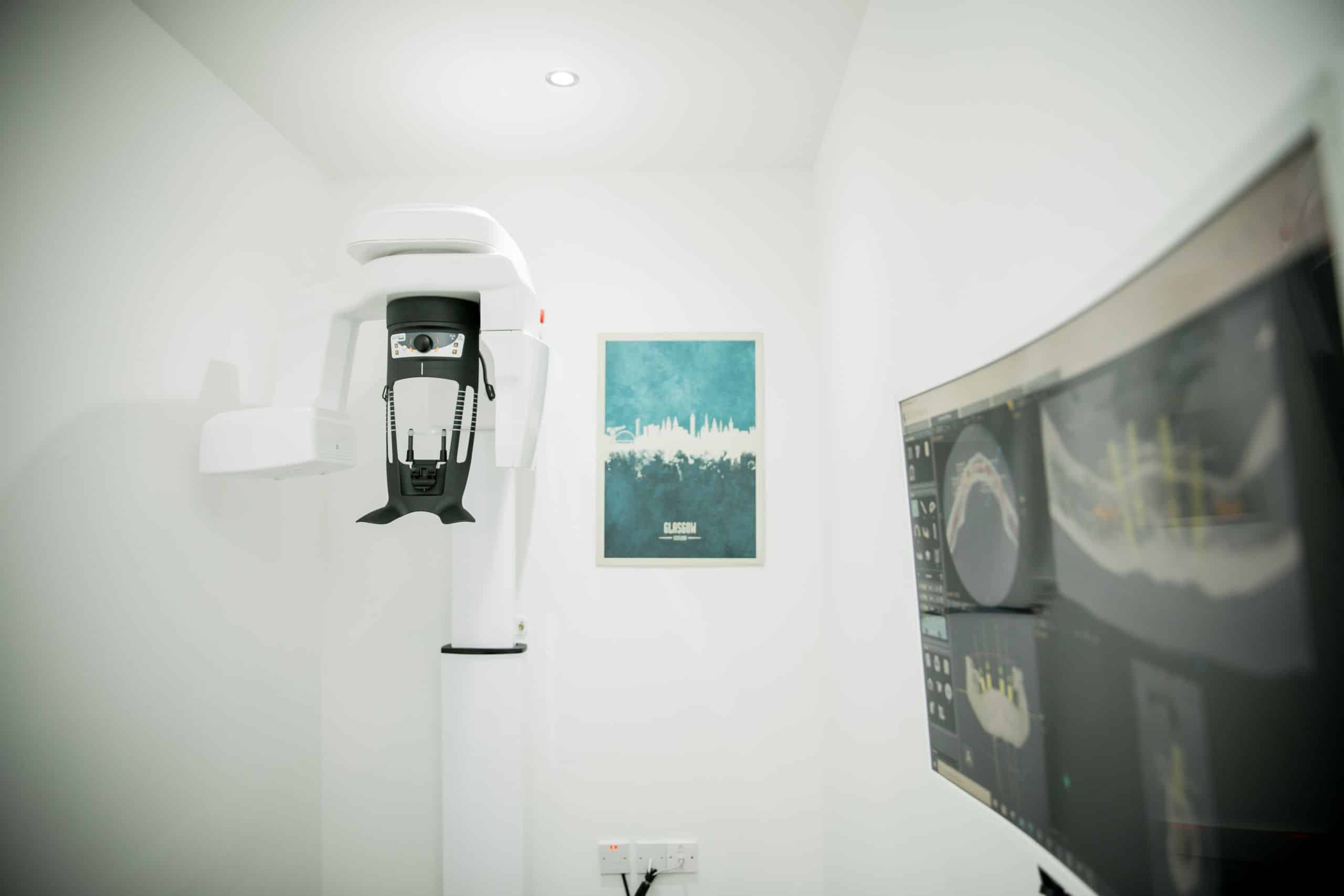
At Erskine Dental Care, we use an in-house CBCT scanner, so scans are taken and reviewed on-site by the same planning team, with no need for an external referral. Some practices can hold an initial chat over the phone before you visit in person.
2. When extra preparation is needed

Not every patient is ready for placement straight away. If your jawbone lacks density, bone grafting may be needed first to build up the area, and this may take three to six months to heal. A damaged tooth, gum disease or an infected tooth is treated before your implant goes in.
Addressing these issues first helps create the best conditions for successful implant treatment.
3. Placing the implant

On the day of surgery, the area is numbed with a local anaesthetic, so you should not feel pain. Your implant dentist makes a small opening in the gum and places the titanium implant into the jawbone.
Dental implant placement is a minor surgery, with the titanium post carefully placed into the prepared area. Many patients report that the procedure is more comfortable than expected. A protective cap or temporary tooth may be fitted while the implant site heals. Placing the abutment usually happens later, in a separate short appointment.
4. The tooth implant healing process

This is where the real change happens, quietly, beneath the gum line. Over three to six months, your jawbone gradually fuses to the implant surface in a process called osseointegration.
Gum tissue around the site usually settles within about two weeks, while full bone healing takes much longer. Temporary teeth can be worn during this time, so you are never left with a gap.
5. Fitting the abutment and your new tooth

Once healing is complete, your dentist attaches the abutment, the small connector between the implant and your tooth. An impression or digital scan is taken and sent to a dental laboratory, where a custom crown, bridge or denture is made to match your surrounding teeth. When it is ready, your dentist fits and adjusts it so your bite feels comfortable. This final step completes the tooth implant process.
How long does the dental implant procedure take?
Every case is different, but the dental implant process usually takes four to nine months from consultation to final tooth. The healing stage, osseointegration, accounts for most of that timeline. Straightforward single-tooth cases without grafting move faster. Cases needing bone grafting or extractions take longer because each stage has to heal before the next begins.
Any dental implant procedure in the UK that dentists carry out should comply with professional standards set by the General Dental Council and relevant clinical guidance. Your dentist will build a personalised treatment plan once your assessment is done.
Note that treatment times vary depending on individual circumstances.
Recovery and aftercare
Recovery from dental implant surgery is usually more straightforward than people expect, which is one of the added benefits of dental implants. Soft foods help for the first few days, and a cold compress eases any swelling around the jaw. Gentle brushing and salt-water rinses keep your mouth clean without disturbing healing tissue. Once healed, your implant functions like a natural tooth and needs the same daily care:
- Regular brushing
- Flossing
- Check-ups
Healing time varies, but most people return to normal eating and their usual routine within two to three weeks. Seek urgent dental advice if you develop heavy bleeding, increasing swelling, fever or difficulty swallowing.


Frequently asked questions
Below are the questions patients ask us often. You can find more answers on our dental implant FAQs page.
The procedure itself is carried out under local anaesthetic, so you should not feel pain during the procedure, although you may notice pressure or vibration. Afterwards, mild discomfort or swelling is normal for a few days and usually settles with over-the-counter pain relief, if appropriate for you. Most patients compare it to recovering from a tooth extraction rather than anything more involved.
Implant failure is uncommon when a case is planned and placed carefully, although no treatment can guarantee success. It is most often linked to smoking, poor oral hygiene, or gum disease left untreated before placement. Following your dentist’s aftercare advice lowers the risk, and most issues are caught early at routine check-ups, when they are far easier to manage.
Most adults in good general health with enough jawbone are suitable for implants. Some medical conditions, such as uncontrolled diabetes, may need managing first, and smoking can slow healing. Where the jawbone has shrunk over time, bone grafting often still makes treatment possible.
Age alone does not usually prevent someone from being considered for dental implants, provided they are otherwise suitable for treatment. A 2025 systematic review found five-year implant survival in patients over 75 was as high, or higher, than in those aged 65 to 75. A consultation is the only way to confirm whether you are a good candidate.
What our Implant patients say about us.
Don’t just take our word for it, hear from our patients who have received Implant Treatment at Erskine Dental Care.
John Smith
Glasgow

The change in confidence since my treatment has changed my life forever!
Edith Kowalski
Erskine
The team at Erskine Dental Care were absolutley amazing from start to finish, couldnt be happier with my smile!
Patrick Ewing
Erskine
I can now smile with confidence since receiving treatment from Erskine Dental Care.
About the medical reviewer
This content was reviewed by Dr Philip Byrne, BDS, DipImpDent, Principal Dentist and Full Arch Implant Dentist at Erskine Dental Care, Erskine, Scotland.
Dr Philip is a GDC-registered Dentist (No. 80751) who has been placing dental implants since 2007 and limits his practice exclusively to implant dentistry. He holds a Bachelor of Dental Surgery from the University of Glasgow (2002) and a Postgraduate Diploma in Implant Dentistry from Newcastle University (2018). Dr Byrne is an Associate Fellow of the Association of Dental Implantology (ADI), reflecting his specialist focus in implant and full-arch implant dentistry.
Last reviewed: July 2026