

Bone Loss in Teeth
Important: The information on this page is for general guidance only and is not a substitute for professional dental advice. Suitability for dental implants, including the Neodent implant systems used at Erskine Dental Care, varies from person to person. Only a full consultation and examination with our implant team can confirm the right treatment plan for you. If you have concerns about your oral health, please get in touch with our team or speak to your GP.
Many people only become aware of dental bone loss by accident. It rarely causes pain or discomfort in its early stages and it does not announce itself the way a cracked filling does. Your dentist may spot it on an X-ray or you may notice changes such as loose or shifting teeth. Bone loss in teeth can often be managed by treating the underlying periodontal disease, while bone loss following tooth removal may require different treatment. Knowing the possible signs can help you seek early intervention before the condition becomes more advanced.

What is dental bone loss?
The bone around each tooth root helps support and hold the tooth in place, much like soil supports a fence post. When that bone is lost, teeth can lose some of their support. Two common caused for dental bone loss include:
- Gum disease
- The gap left behind after tooth loss
Both processes can develop gradually, which is why regular dental check-ups matter even when you have no obvious symptoms.
Gum disease and how
it affects bone levels
Gum disease is a major cause of bone loss the gums. Bacteria and plaque accumulate around the gumline, inflammation develops and periodontal disease can progressively damage the tissues and bone supporting the teeth. Deep pockets form, which harbour more bacteria and keep the process going. Healthy gum tissue forms a protective seal around the teeth, helping to prevent bacteria from reaching the tissues that support them.
The Adult Oral Health Survey found 40.6% of dentate adults in England had at least one site with periodontal pocketing of 3.5mm or more. Among adults aged 65 to 74, over one in five had deeper pocketing. Periodontitis is common, but it can be managed with appropriate professional treatment and ongoing oral hygiene for prevention of serious health problems.

Early signs and symptoms of bone loss in teeth
Bone loss from gum disease is often painless until well advanced, so early signs are usually visual rather than uncomfortable. Symptoms may include:
- Gum recession, which makes teeth look longer than they used to
- Loose teeth, or teeth that have shifted position slightly
- Bleeding when you brush or floss
- Dentures that have stopped fitting the way they did
- Changes to your bite or jaw pain when chewing
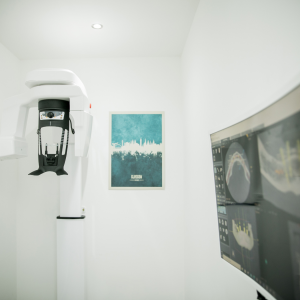
None of these confirms a diagnosis alone. Your dentist checks bone levels with X-rays at routine examinations, which is how most dental bone loss gets picked up. Early assessment and treatment can help prevent further damage to the tissues and bone supporting your teeth.
Book a free consultation with an implant team that has placed thousands of implants across Scotland, and find out where your bone levels stand.
Why tooth loss causes bone loss in the jaw
A tooth root does a quiet job you never notice. Every time you chew, it passes force into the surrounding bone, and this stimulation helps maintain bone density around the tooth. When a tooth is removed, that stimulation is reduced and the bone surrounding the former tooth socket can gradually be resorbed. The amount of bone loss varies considerably between individuals.
That is why tooth replacement matters beyond facial appearance. It also explains why ill-fitting dentures can make things harder, since they press unevenly on the gum rather than stimulating bone. Significant bone loss in the jaw can affect which tooth replacement options are suitable, so early assessment can help your dentist plan appropriate treatment and support healing.
Treatment options for dental bone loss
What suits you depends on the cause and extent of the loss, the condition of your teeth and gums, your general health and your treatment goals. Treatment usually starts with addressing the underlying causes before considering whether bone reconstruction or tooth placement is appropriate.
Deep cleaning and periodontal care

Where gum disease is the cause, the first treatment path is usually non-surgical. Professional periodontal treatment may include scaling and root surface debridement to remove plaque and calculus from around and below the gumline. Ongoing periodontal maintenance and good oral hygiene can help control gum disease and reduce the risk of further bone loss. Choosing to treat gum disease early is what protects the bone you still have, and it supports your jawbone health for years afterwards.
Bone grafting and guided bone regeneration

Where bone has already been lost, grafting is a surgical intervention that rebuilds volume. Guided bone regeneration uses a membrane to encourage new bone growth. Ridge preservation, placed at extraction, limits resorption before it starts. In some cases, these procedures can increase the available bone and make implant treatment possible where there was previously insufficient bone.
Replacing the root with dental implants
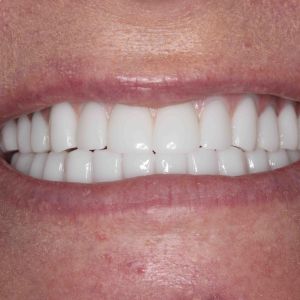
Dental implants restore the functional stimulation to the surrounding bone and may help preserve bone around the implant site. Implant-retained dentures stay stable for the same reason. If you have missing teeth, our page on replacing one to four covers your options, and All-on-4 can provide a fixed full-arch tooth replacement option for suitable patients.
Ready to restore your teeth?
Book your complimentary implant consultation today. See your new smile in a digital preview, ask us anything, and leave with a clear plan, no pressure, just possibilities.




Bone that has been lost because of periodontal disease does not usually regrow on its own. However, appropriate periodontal treatment can control the disease and prevent further bone loss, while procedures such as bone grafting or guided bone regeneration may rebuild bone in selected cases.
It can, over a long period. The jaw supports the lower third of your face, and reduced height there can soften your profile. This tends to follow years of untreated bone loss and teeth problems rather than months, and replacing teeth early helps preserve your facial structure.
Some risk factors do make it more likely, and knowing yours helps your dentist plan around them. SDCEP names smoking and diabetes as well-established risk factors for periodontitis. Smoking can also reduce the response to periodontal treatment, so stopping smoking can improve both periodontal health and treatment outcomes. Family history plays a part, since susceptibility has a genetic element.
Stress, weight and other medical conditions are studied too, though the evidence there is less settled. None of this decides the outcome by itself, and the factors you can change are worth raising at your next check-up.
Get in touch with our team about your case, and get dental care
backed by 24 years of experience and thousands of implants placed.
About the Medical Reviewer
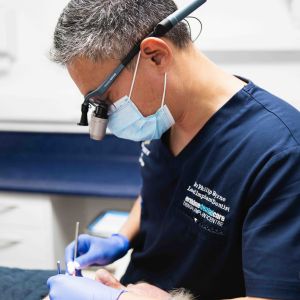
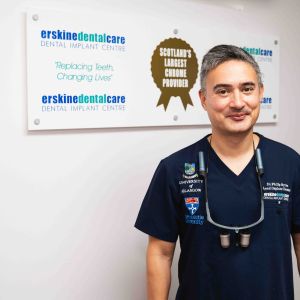
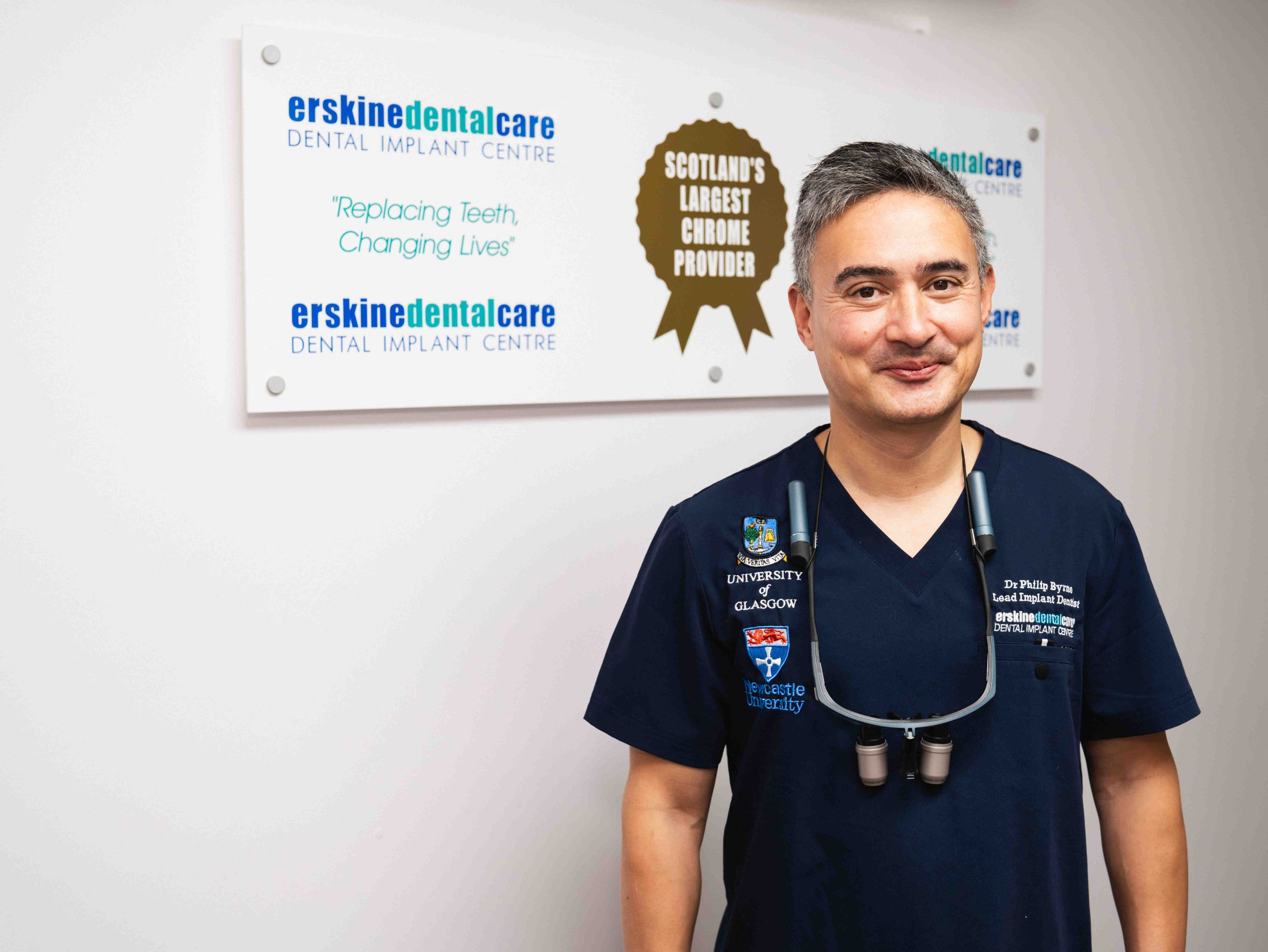
This content was reviewed by Dr Philip Byrne, BDS, DipImpDent, Principal Dentist and Full Arch Implant Dentist at Erskine Dental Care, Erskine, Scotland.
Dr Philip is a GDC-registered Dentist (No. 80751) who has been placing dental implants since 2007 and limits his practice exclusively to implant dentistry. He holds a Bachelor of Dental Surgery from the University of Glasgow (2002) and a Postgraduate Diploma in Implant Dentistry from Newcastle University (2018). Dr Byrne is an Associate Fellow of the Association of Dental Implantology (ADI), reflecting his specialist focus in implant and full-arch implant dentistry.
Last reviewed: August 2026
What our Dental Implant patients say about us.
Don’t just take our word for it – hear from our patients who have received Dental Implants at Erskine Dental Care.
John Smith
Glasgow

The change in confidence since my Invisalign treatment has changed my life forever!
Edith Kowalski
Erskine
The team at Erskine Dental Care were absolutley amazing from start to finish, couldnt be happier with my smile!
Patrick Ewing
Erskine
I can now smile with confidence since receiving treatment from Erskine Dental Care.
