

Missing 1-4 Teeth
Missing a few teeth can affect more than just your smile. It can change how you eat, how you speak, and how confident you feel day to day. At Erskine Dental Care, we use dental implants to replace one to four missing teeth with restorations designed to look natural, feel secure, and support long-term oral function for many years.
Whether you’ve lost a tooth through injury, tooth decay or gum disease, our experienced implant team is here to restore your smile and help you feel like yourself again.
What happens when you have missing teeth?
Research published in the International Journal of Oral Science suggests that after a tooth extraction, the surrounding jawbone can lose up to 25% of its width in the first year alone. That’s why many of our patients have been told they may need additional procedures, and why acting sooner rather than later makes a real difference.
Losing a tooth, or several, can seem like a small thing. Many people adapt to missing teeth over time. But tooth loss sets off a chain of changes in the mouth that, if left unaddressed, can become harder to treat over time.
Some of the most common consequences include:
- Difficulty eating and chewing
- Slurred or unclear speech
- Bone resorption in the jaw where the tooth root was
- Adjacent teeth drifting or tilting into the gap over time
- Changes to your facial structure
- Bite issues that can lead to jaw pain and place extra strain on the remaining healthy teeth
Dental implants are widely used to replace missing teeth because they restore both function and appearance. They’re fixed in place, meaning no slipping or removal, just a confident, natural smile.
What are dental implants?
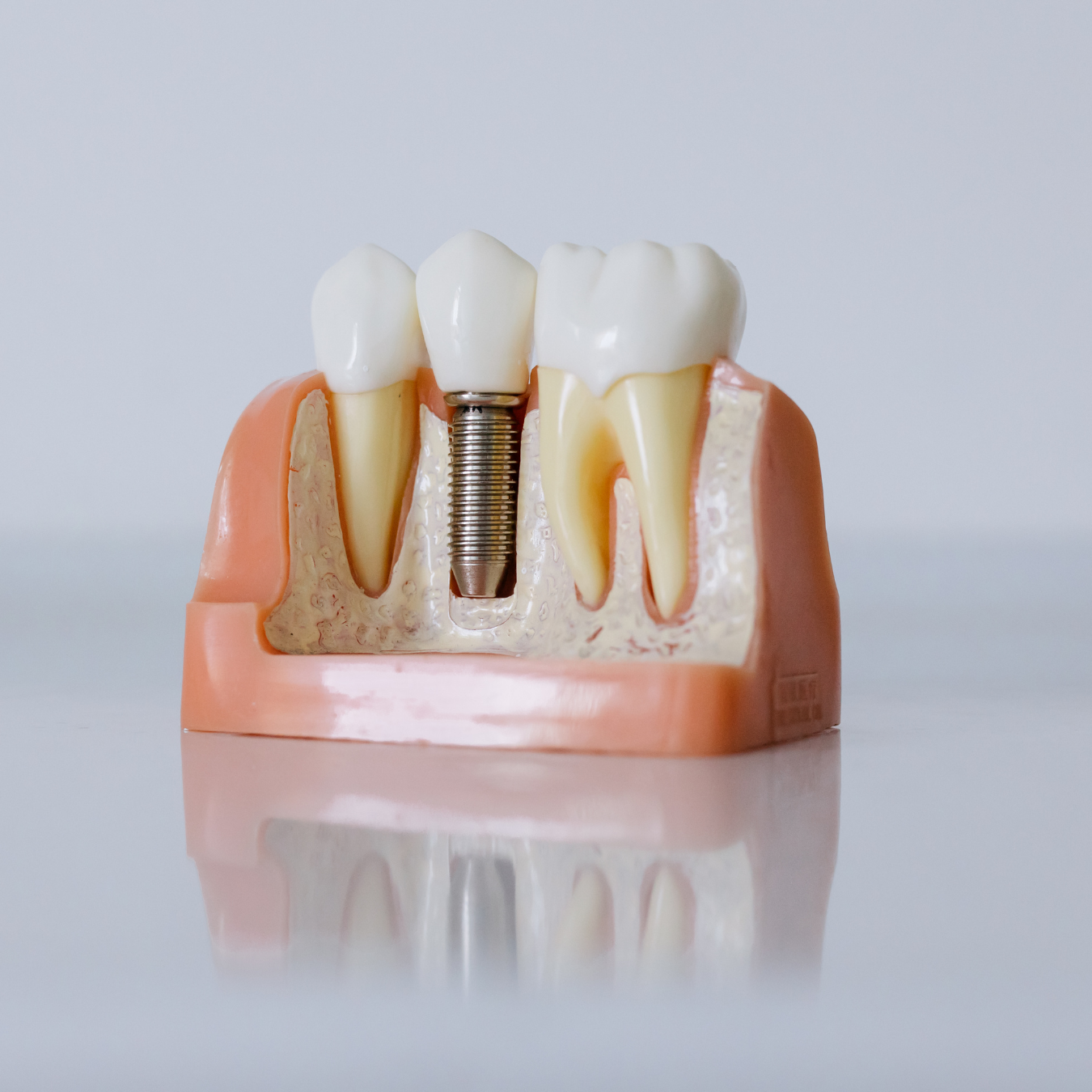
Dental implants are small titanium posts placed in the jawbone, acting like artificial tooth roots. Once healed, they can support:
A single crown (for one missing tooth)
A single tooth implant with a custom-made crown on top gives you a replacement tooth that looks and functions just like the natural one it replaces.
A dental bridge (for multiple missing teeth)

Rather than placing a separate implant for every gap, an implant-supported bridge spans the space, restoring multiple teeth without the need for partial dentures.
A strong, permanent replacement

Unlike complete dentures or removable options, implants are fixed into the jawbone and do not need to be removed for mealtimes or cleaning.
Benefits of dental implants for 1-4 missing teeth.
Dental implants for multiple teeth work differently from other tooth replacement options, and those differences matter in the long run.
- Natural look and feel: Each dental implant bridge is colour-matched and shaped to blend seamlessly with your surrounding natural teeth.
- Secure and stable: Unlike removable denture options, implants won’t move and do not need to be removed when you go to bed.
- Help prevent bone loss: Implants keep the bone stimulated and help prevent bone loss that occurs with missing teeth.
- No impact on neighbouring teeth: We don’t need to grind down surrounding teeth like we would with a tooth supported bridge.
- Cost Effective: You don’t need an individual implant for each missing tooth. If you are missing 4 teeth next to each other, you many only need 2 implants to fill the space, this helps to reduce costs.
- Easy to maintain: With good oral hygiene, regular brushing, flossing, and dental care check-ups, implants can be cared for just like your adult teeth.
If you have 3 missing teeth in a row and want to explore your options with Scotland’s most experienced implant team, book a free consultation with Erskine Dental Care.


Who’s suitable for dental implants?
Most healthy adults missing 1-4 teeth can be considered for implant treatment. You may be a good candidate if:
- You’re missing one to four teeth
- You have 2 or more missing teeth next to each other
- Your gums are healthy
- You have enough jawbone to support an implant
- You don’t smoke, or you’re willing to stop during the healing process
At your initial consultation, we’ll carry out a full assessment, including digital scans and X-rays, to evaluate your jawbone, gum health and overall suitability. If implants are not immediately suitable, we will explain any treatment options that could help first, such as bone grafting to develop the upper or lower jaw area before implant placement.
What does the dental implant treatment process involve?
Many patients find the implant process more straightforward than they expected. Treatment timelines vary depending on individual healing and whether additional procedures are required.
- Consultation & planning
We’ll assess your oral health, take digital scans, and take digital scans to plan your treatment.
- Implant placement
A small titanium post is placed in below the gum. This is done under local anaesthetic and is usually more comfortable than people expect.
- Healing period
The implant is left to heal and integrate with your jawbone — this takes a few months.
- Fitting your crown
Once healed, we attach a custom-made crown or bridge to complete the restoration.
We’ll guide you every step of the way and make sure your treatment is smooth and stress-free.


Most adults who are in good general health and have sufficient jawbone density can get dental implants. However, certain medical conditions or habits like smoking may affect suitability. Our team will assess your individual situation thoroughly at your consultation and discuss any steps that may be needed before implant placement can begin
The procedure itself is typically performed under local anaesthesia to ensure comfort during the surgery. Afterwards, there might be some discomfort or swelling, which can be managed with over-the-counter pain relief or medications prescribed by our implantologists.
The duration varies depending on individual cases, but generally takes several months from implant placement to final restoration. The healing process and osseointegration (implant fusing with bone) require time before attaching the permanent crown or bridge.
At Erskine Dental Implant Centre, our dental implant success rates are impressively high, around 98%. However, success depends on various factors such as oral hygiene, overall health, and the experience of the dental team performing the procedure. Our implantologists have many decades of experience with over 3000 implants placed in the last 5 years with many more previously.
Our team’s experience is reflected in our patient outcomes and five-star reviews. Maintaining good oral hygiene and attending regular dental care appointments are key to the long-term success of your implants.
Yes, there are cases where immediate load or same-day implants can be placed. However, this option is not suitable for everyone. Our Implant Team will assess your specific situation to determine if you’re a candidate for this accelerated approach.
Although you get your new teeth the same day, the implants take about 3-4 months to fully integrate with your jawbone. During this healing period, you’ll wear temporary teeth until your permanent set is ready.
Yes. Implants can be used to replace front teeth as well as back teeth. When a tooth at the front of the mouth is missing, the natural appearance is particularly important. Our on-site laboratory creates restorations that are carefully matched in colour, shape, and size to give a natural-looking result. Where bone loss has already occurred in that area, a bone grafting procedure may be recommended first to ensure a stable outcome.
Get in Touch with Us Today: 0141 812 8420
About the medical reviewer
This content was reviewed by Dr Philip Byrne, BDS, DipImpDent, Principal Dentist and Full Arch Implant Dentist at Erskine Dental Care, Erskine, Scotland.
Dr Philip is a GDC-Registered Dentist (No. 80751) who has been placing dental implants since 2007 and limits his practice exclusively to implant dentistry. He holds a Bachelor of Dental Surgery from the University of Glasgow (2002) and a Postgraduate Diploma in Implant Dentistry from Newcastle University (2018). Dr Byrne is an Associate Fellow of the Association of Dental Implantology (ADI), reflecting his specialist focus in implant and full arch implant dentistry.
Last reviewed: May 2026
What our Implant patients say about us.
Don’t just take our word for it – hear from our patients who have received Dental Implants at Erskine Dental Care.
John Smith
Glasgow

The change in confidence since my treatment has changed my life forever!
Edith Kowalski
Erskine
The team at Erskine Dental Care were absolutley amazing from start to finish, couldnt be happier with my smile!
Patrick Ewing
Erskine
I can now smile with confidence since receiving treatment from Erskine Dental Care.
