

Dental Implant Failure
Important: The information on this page is for general guidance only and is not a substitute for professional dental advice. Suitability for dental implants, including the Neodent implant systems used at Erskine Dental Care, varies from person to person. Only a full consultation and examination with our implant team can confirm the right treatment plan for you. If you have concerns about your dental or general health, please speak to your GP.
Dental implants are designed to provide long-term tooth replacement, and the majority are successful. However, complications and implant failure can occur. When problems do develop, there may be warning signs. Recognising these signs early can help you seek appropriate treatment sooner, which may improve the outcome.
Book a free consultation for an honest assessment of your implant, with a team that has placed thousands across Scotland.

How often does dental implant failure happen?
Dental implants have a high success rate. Research suggests survival rates of around 90-95% over five years or more, although outcomes vary depending on the patient, implant, treatment and length of follow-up. The failure rate is low, so the possibility of losing one is real but small. What matters more than the headline figure is why failures happen, because some risks can be reduced through appropriate planning, treatment and ongoing care.
Early failure vs late failure
Timing can help your dentist understand what may have happened. An implant that does not integrate successfully with the bone is different from one that served you well for a decade. The table below sets out some of the typical differences and why the treatment path differs.
| Early Failure | Late Failure | |
| When it happens | Within weeks to a few months of implant placement | A year or more after the final restoration |
| Usual causes | Failure of osseointegration, infection at the implant site, insufficient bone support or surgical complications | Peri-implantitis, bone loss, excessive mechanical stress or teeth grinding |
| What it often means | The implant never integrated with the jaw bone, so it is removed and the site allowed to heal | The implant initially integrated successfully but later lost support, so treatment focuses on managing the underlying cause |
Warning signs of a failed dental implant
A successful, well-integrated implant should feel like nothing at all. The following changes should prompt you to contact your dentist rather than waiting to see whether they settle:
- Mobility, meaning the implant feels wobbly when you chew or talk
- Persistent pain or discomfort around the implant site
- Gum inflammation, swelling or recession exposing more of the implant
- Difficulty biting or a change in how your teeth meet
- Bleeding around the implant when you brush
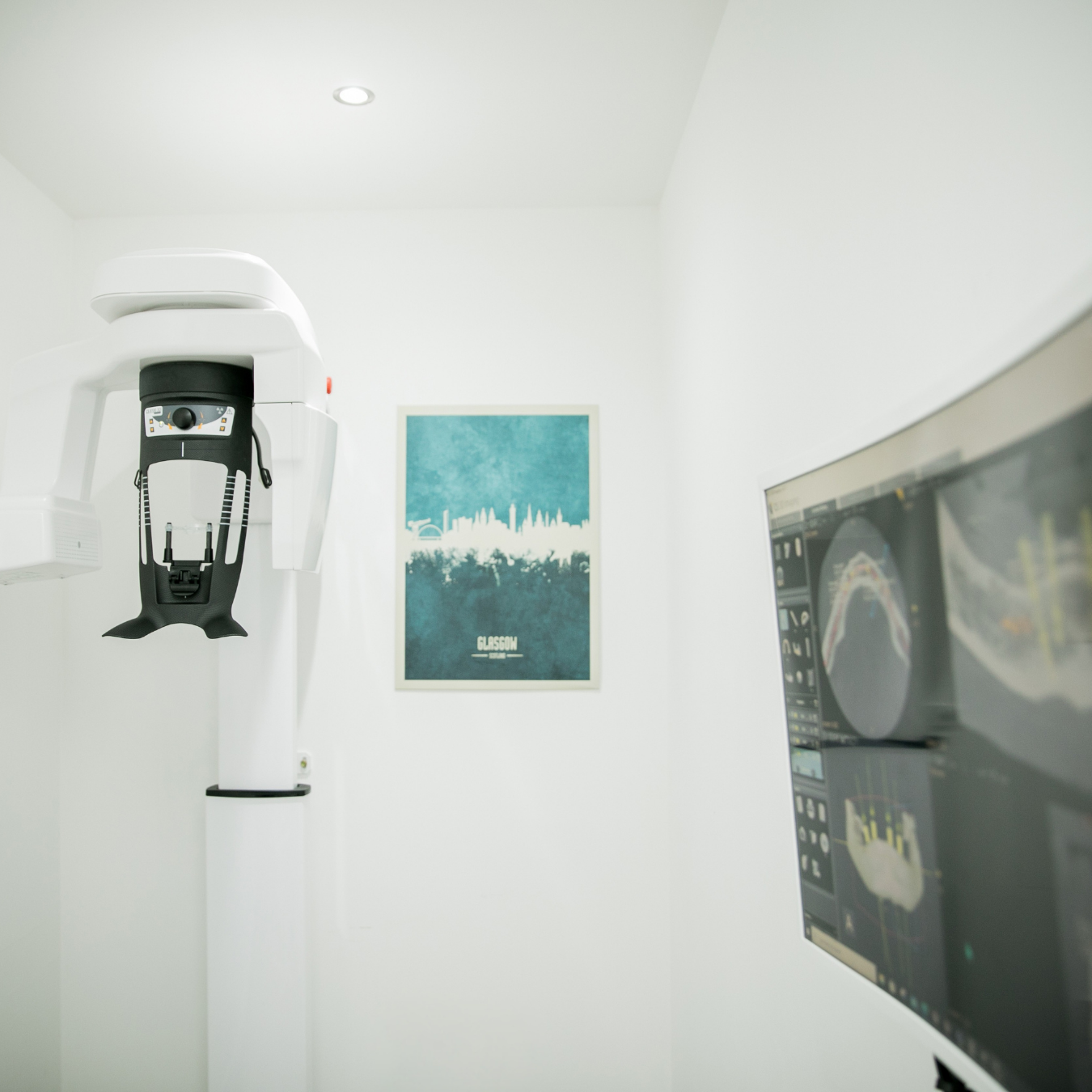
Mobility is one of the clearest warning signs, because a well-integrated implant should be stable. Your dentist may take X-rays or carry out other examinations to assess the bone and surrounding tissues. Some problems, including bone loss, may not be visible without clinical assessment or imaging. Seeking advice early may give your dentist more treatment options than delaying an assessment.

What causes a failed dental implant
Implant failures usually trace back to one of a few causes, and most of them are either preventable or treatable once identified.
Infection and peri-implantitis

Peri-implantitis is an inflammatory condition affecting the bone supporting an implant. A 2022 systematic review in BMC Oral Health found it affects roughly 19.5% of patients with implants. Left untreated, it can progress, though caught early it is often manageable. Good oral hygiene around the implant site is your strongest protection, and it is an important part of protecting your oral health.
Not enough bone to hold it

A failed implant can sometimes be related to the condition of the bone supporting it. An implant needs healthy bone to remain stable. Without adequate bone at placement or where bone loss develops later, additional treatment may be required. Depending on the individual case, a bone graft or another form of bone augmentation may be considered before placing a new implant.
Smoking, medications and medical conditions

These are important risk factors to consider when assessing your suitability. Smoking can affect healing and may increase the risk of complications. Diabetes and some conditions may slow the healing process, and some medications affect how bone responds. None of these factors necessarily rule out implant treatment, but each belongs in your medical history at assessment.
In non-smokers, one 2025 review found peri-implantitis at the implant level sat at just 5.2%. As with any research finding, individual risk can vary, so your dentist will consider your circumstances rather than relying on a single statistic.
Grinding and mechanical stress

Excessive mechanical force can place additional stress on an implant and its restoration. Teeth grinding, particularly at night, loads an implant in ways it was not designed for. A night guard may help manage this, which is why your dentist checks your natural teeth for wear.
Planning and placement

Proper planning prevents many factors that lead to problems. Poor positioning, an implant placed into insufficient bone or an error during surgery can all cause early failure. A successful procedure starts long before the day itself, which is where an experienced dentist and 3D scanning can help with accurate treatment planning.
Can your body reject a dental implant?
Patients often ask about dental implant rejection, and it is worth being clear about what they usually mean. Dental implant failure is not usually an immune rejection reaction in the same way that the body can reject donor tissue. Titanium is biocompatible, which is why it has been used in implantation for decades.
A rejected dental implant is generally not the same process as the body rejecting donor tissue. Failure can occur if the implant does not successfully integrate with the bone or if infection, bone loss or other complications affect its stability. Whatever you have heard called tooth implant rejection, your dentist can assess the cause and discuss the appropriate treatment options.
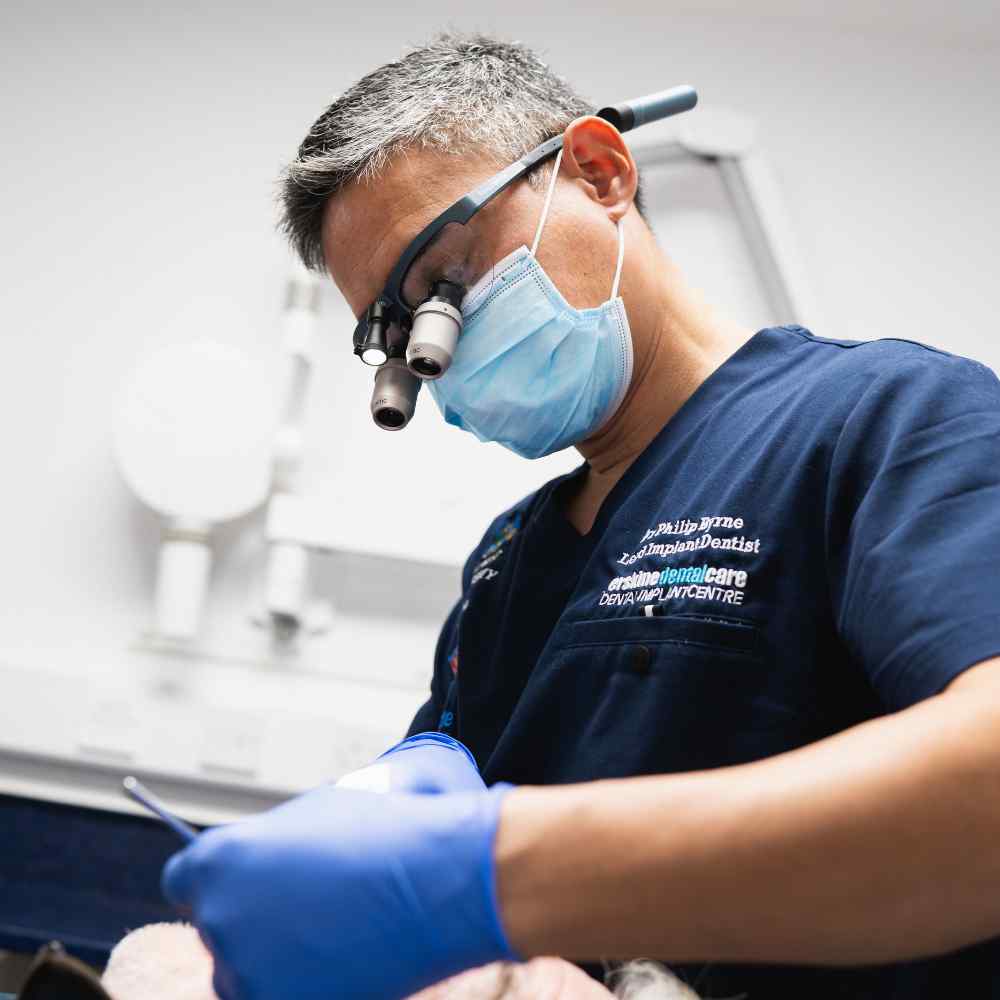
What happens after a failed tooth implant?
Losing an implant does not necessarily mean that further treatment is impossible. Most patients may be able to have a new implant placed successfully, often in the same position.
A failed dental implant is usually removed under local anaesthesia, which is a relatively straightforward procedure, although the complexity can vary depending on the individual case. Your dentist then treats any infection and lets the site heal, which typically takes two to three months on its own. If bone has been lost, grafting rebuilds it, and healing from a graft adds several more months before a replacement can go in.
Where a second implant is not suitable, a dental bridge is an alternative worth discussing. Bridges rely on the teeth either side for support, so your dentist will check those are sound first. Our page on replacement dental implants covers what new teeth after a redo involve in more detail.
Lowering your risk of tooth implant failure
Most of what protects an implant is ordinary daily maintenance.
- Brush twice daily and clean around the implant as your dentist shows you
- Keep regular check-ups so complications are caught while small
- Stop smoking, which improves healing and long-term outcomes
- Treat gum disease before implant treatment begins
- Wear a night guard if you grind






Not always. Where the implant is still stable and the problem is inflammation, treatment focuses on cleaning the implant site and controlling infection. Removal becomes the answer when a failed dental implant has lost too much support to be saved. Your dentist decides based on mobility and what the X-rays show, and some cases are monitored across several visits before that call is made.
Often, yes. The site needs to heal first, and any infection has to clear. Where enough healthy bone remains, a new implant can go into the same position. Where bone has gone, grafting comes first, and your dentist may choose a slightly different angle or position to find better support.
Sometimes not, which is why check-ups matter. Bone loss around an implant can progress with no pain or discomfort at all, particularly in the early stages. Routine X-rays can sometimes identify changes before symptoms appear. Any movement, however slight, is worth raising straight away.
Use the website chatbot to ask Dr Philip Byrne’s team about a failed implant,
backed by 24 years of experience and thousands placed.
About the medical reviewer
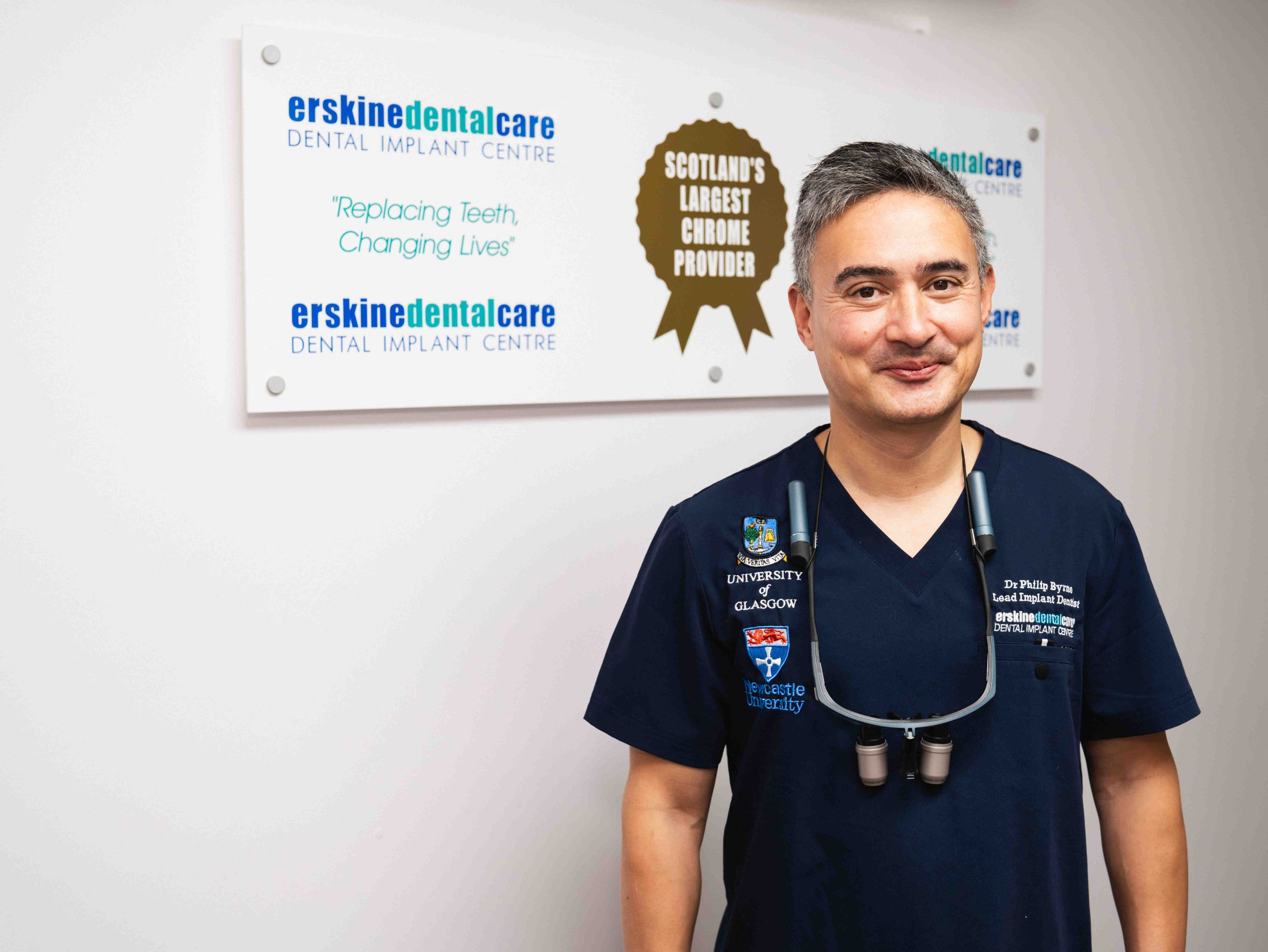
This content was reviewed by Dr Philip Byrne, BDS, DipImpDent, Principal Dentist and Full Arch Implant Dentist at Erskine Dental Care, Erskine, Scotland.
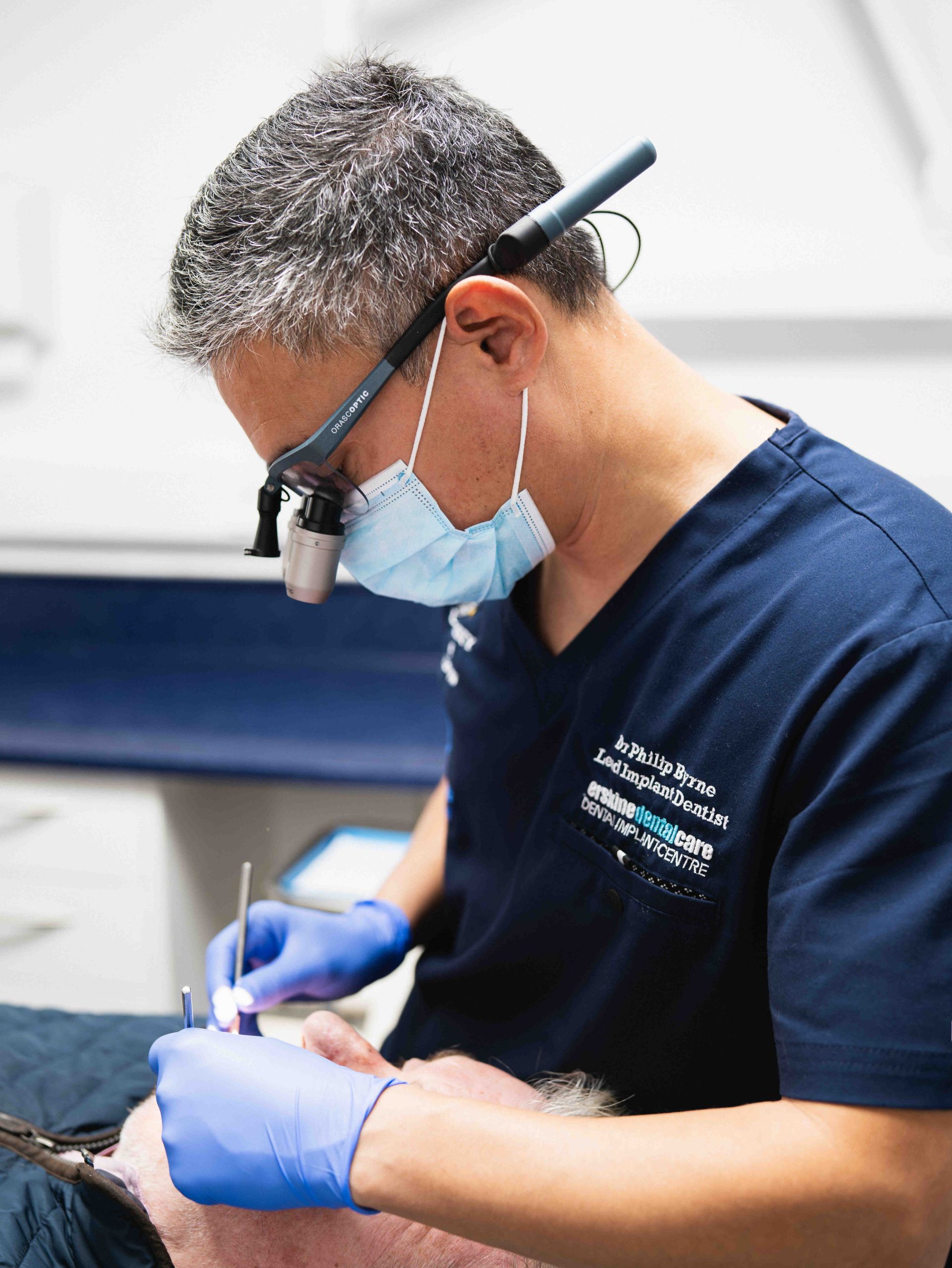
Dr Philip is a GDC-Registered Dentist (No. 80751) who has been placing dental implants since 2007 and limits his practice exclusively to implant dentistry. He holds a Bachelor of Dental Surgery from the University of Glasgow (2002) and a Postgraduate Diploma in Implant Dentistry from Newcastle University (2018). Dr Byrne is an Associate Fellow of the Association of Dental Implantology (ADI), reflecting his specialist focus in implant and full-arch implant dentistry.
Last reviewed: August 2026
What our Dental Implant patients say about us.
Don’t just take our word for it – hear from our patients who have received Dental Implants at Erskine Dental Care.
John Smith
Glasgow

The change in confidence since my Invisalign treatment has changed my life forever!
Edith Kowalski
Erskine
The team at Erskine Dental Care were absolutley amazing from start to finish, couldnt be happier with my smile!
Patrick Ewing
Erskine
I can now smile with confidence since receiving treatment from Erskine Dental Care.
